
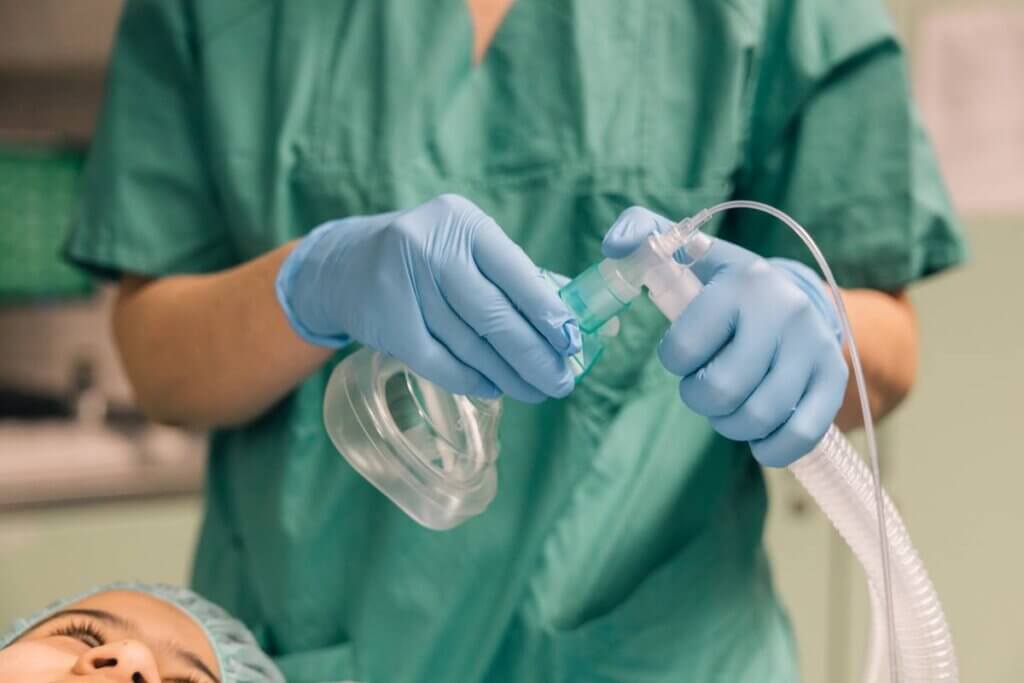
Since 2020, after the COVID-19 pandemic highlighted staffing shortages of trained anesthesia professionals, Certified Anesthesiologist Assistant (CAA) programs have grown quickly to help meet the demand for anesthesia providers. Additionally, more surgeries have shifted to outpatient settings, increasing the potential niche for anesthesiologist assistants. In response, new CAA programs have opened across the country, established schools have added campuses, and several states have updated laws to allow licensure to work there. This has made CAA training more accessible and broadened the range of clinical experiences available to students.
CAAs are trained anesthesia professionals who work under the supervision of an anesthesiologist. Prior to surgery, they review medical histories, perform physical exams, and help prepare patients. During procedures, they deliver anesthesia, manage airways, place intravenous and arterial lines, administer fluids and medications, monitor vital signs, and assist with regional anesthesia. Following surgery, they help manage pain, nausea, and recovery, making sure patients safely transition out of the operating room. Their role is hands-on and vital in ensuring safe anesthesia care 1,2.
In the past few years, new CAA programs have opened across a number of states. Since 2020, South University expanded to different regions in Florida, and Bluefield University started a new program. Ohio added two programs: one at Ohio Dominican University and another at Northeast Ohio Medical University. In addition, Case Western Reserve University expanded to Austin, Texas, Nova Southeastern University opened a site in Colorado, and the University of New Mexico began a program within its large health system. Lipscomb University also announced Tennessee’s first CAA program. These programs partner with hospitals and surgery centers to give students experience in a variety of settings, from major operating rooms to outpatient and specialty procedure areas 3–11.
While the core training in physiology, pharmacology, and anesthesia practice remains, newer programs have added more simulation-based training, competency checkpoints, and earlier hands-on experience in clinical settings. The pandemic encouraged flexible teaching methods, so many programs now use hybrid learning, flipped classrooms, and shared online case discussions 12.
Alongside the launch of new CAA programs, more states have updated their laws to allow CAAs to practice. This has created more opportunities for graduates to stay and work near where they trained. Schools work closely with hospitals and state boards to ensure enough training spots match local job needs. Many programs also offer scholarships or guaranteed clinical placements and actively recruit students from diverse backgrounds or with prior healthcare experience 1,13–15.
From 2020 onward, CAA education has moved from regional concentration to a more national footprint: new programs, new campuses, and new licensure laws are converging to meet sustained demand for high-reliability anesthesia care. These post-2020 programs are poised to supply graduates trained for contemporary operating rooms with technically adept, focused, team-based safety cultures.
References
1. Certified Anesthesiologist Assistants. https://www.asahq.org/advocating-for-you/anesthesiologist-assistants.
2. Pinegar, M. & Townsend, T. The Role of Anesthesiology Assistants in the Anesthesiology Patient Care Team. Mo Med 116, 63–66 (2019).
3. Certified Anesthesiologist Assistant MSA degree | School of Medicine. https://hsc.unm.edu/medicine/departments/anesthesiology/education/msa-program/.
4. Lipscomb announces plans to launch Certified Anesthesiologist Assistant program to address critical healthcare workforce needs. Lipscomb University https://lipscomb.edu/news/lipscomb-announces-plans-launch-certified-anesthesiologist-assistant-program-address-critical (2025).
5. Author, E. Master in Anesthesia Science Degree| South University. https://www.southuniversity.edu/degree-programs/healthcare/anesthesia-science-mmsc.
6. Anesthesiologist Assistant – CAA | NEOMED. NEOMED – College of Graduate Studies https://www.neomed.edu/graduatestudies/anesthesiologist-assistant/.
7. Anesthesiologist Assistant Studies Program at Ohio Dominican University | Ohio Dominican University. https://www.ohiodominican.edu/academics/masters-degrees/anesthesiologist-assistant-studies/index.html.
8. Master of Science in Anesthesia Program | School of Medicine | Case Western Reserve University. https://case.edu/medicine/msa-program/.
9. Master of Science in Anesthesia | NSU College of Health Care Sciences. https://healthsciences.nova.edu/academics/masters/anesthesiologist-assistant-programs/index.html.
10. Anesthesia Assistant. https://www.all-crna-schools.com/anesthesia-assistant/.
11. Anesthesiologist Assistant (MHSA). Bluefield University https://www.bluefield.edu/academics/programs-of-study/anesthesiologist-assistant/.
12. Samuel, A. & Durning, S. J. From Crisis to Opportunity: Reinventing Medical Education After COVID-19. Perspect Med Educ 14, 371–382. DOI: 10.5334/pme.1672
13. Certified Anesthesiologist Assistants Now Authorized to Practice in Virginia. https://www.asahq.org/about-asa/newsroom/news-releases/2025/03/certified-anesthesiologist-assistants-now-authorized-to-practice-in-virginia.
14. AAAA Scholarship. AAAA https://www.anesthetist.org/aaaa-diversity-scholarship.
15. Statement on Certified Anesthesiologist Assistants (CAAs): Description and Practice. https://www.asahq.org/standards-and-practice-parameters/statement-on-certified-anesthesiologist-assistants-description-and-practice.